TL;DR: In Pittsburgh, asbestos removal typically costs $200 to $800 just to test a sample, $1,200 to $3,500 for a single room like a popcorn ceiling or vinyl floor tile, and $8,000 to $25,000 or more for a whole-house abatement in an older home. The price depends on the material, how much of it there is, and whether the area needs full containment. Homeowners insurance rarely covers the cost unless the asbestos exposure came from a sudden, covered event like a fire or burst pipe.
If you just pulled up a corner of 1960s vinyl floor tile in a Mount Lebanon colonial and found black mastic underneath, or your contractor stopped mid-renovation in a Monroeville split-level because the ceiling texture looked suspicious, you’re probably trying to figure out what this is going to cost before you commit to anything. Pittsburgh’s housing stock skews old, a lot of it built before 1980, and that’s exactly the era when asbestos showed up in floor tile, pipe wrap, ceiling texture, and siding.
How Much Does Asbestos Removal Cost in Pittsburgh, PA?
Most Pittsburgh homeowners pay somewhere between $1,200 and $8,000 for a single-area asbestos abatement job, with testing, containment, and disposal fees built into that range. Whole-house jobs in older homes run higher because of the volume of material and the number of rooms that need containment.
| Scenario | Typical Cost Range |
|---|---|
| Asbestos sample testing (1-3 samples) | $200 - $800 |
| Popcorn ceiling removal (one room, ~200 sq ft) | $1,200 - $2,800 |
| Vinyl asbestos floor tile & mastic removal (per room) | $1,500 - $3,500 |
| Pipe or duct insulation removal (per system) | $1,000 - $3,000 |
| Basement or attic abatement (larger area) | $3,000 - $8,000 |
| Whole-house abatement (pre-1980 Pittsburgh homes) | $8,000 - $25,000+ |
These are typical industry ranges, not a quote. Every property is different, and a licensed abatement contractor should give you a written scope after inspecting the material in place, not a number over the phone.
What Drives the Price of Asbestos Abatement in Pittsburgh?
The biggest cost drivers are the type of material, how much of it there is, and how hard it is to contain safely. A small patch of damaged pipe insulation in a basement costs far less than a full ceiling or an entire floor of 9x9 vinyl tile.
Other factors that move the number:
- Friability. Crumbly, damaged material (friable asbestos) releases fibers more easily and needs stricter containment than solid, intact material like floor tile.
- Accessibility. Removing material from a cramped crawlspace or a finished basement ceiling costs more than an open attic.
- Disposal distance and fees. Asbestos waste has to go to an approved landfill, and transport and disposal fees are part of the invoice.
- Air clearance testing. After removal, many jobs require a third-party air sample to confirm the space is safe to re-occupy, which adds a line item but protects you if you sell the home later.
- Co-located hazards. Pre-1978 homes common throughout the South Hills and the East End often have lead-based paint alongside asbestos. If your contractor finds both, you may need a separate lead paint abatement scope as well.
For more on how these jobs typically run start to finish in this region, see our guide on asbestos and lead abatement in Pittsburgh.
Does Homeowners Insurance Cover Asbestos Removal?
Most homeowners policies do not cover asbestos removal on its own, because wear, age, and pre-existing building materials are typically excluded. Standard policies are built to cover sudden, accidental damage, not the cost of dealing with a material that’s been in the home since it was built, as the Insurance Information Institute explains.
There’s an exception worth knowing about: if a covered event like a fire or a burst pipe damages asbestos-containing material and makes abatement necessary to repair the loss, that portion of the cost may fall under your claim. That’s a policy-by-policy question, so it’s worth asking your adjuster directly and getting the answer in writing before you authorize work. The Pennsylvania Insurance Department is a good resource if you want to understand your policy language before that call.
What Happens During a Professional Asbestos Abatement Job?
A compliant abatement job in Pennsylvania follows a set sequence: testing, notification, containment, removal, and clearance. Skipping any of these steps is how homeowners end up with a failed home sale inspection or a fine.
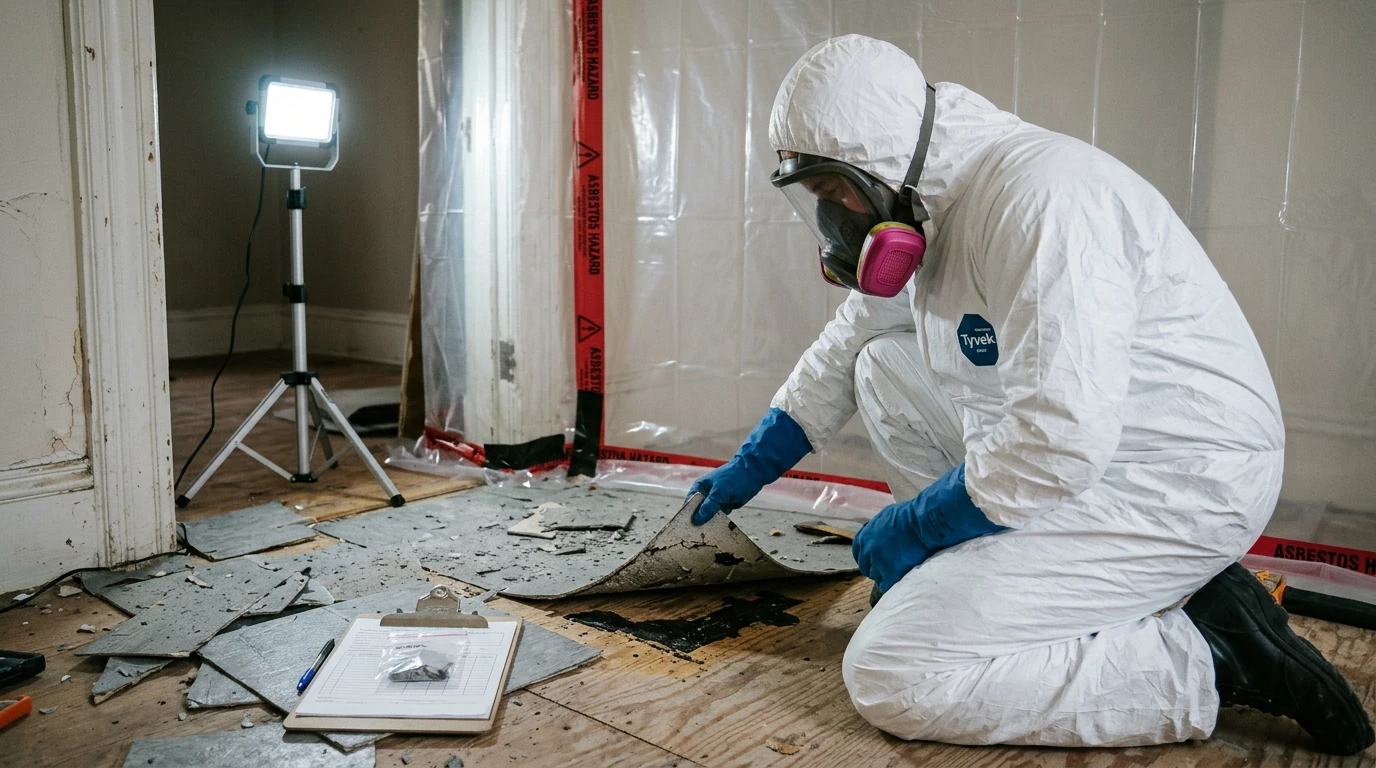
- Testing. A sample of the suspect material goes to an accredited lab to confirm whether it contains asbestos and at what percentage.
- Notification. Depending on the project size, Pennsylvania requires advance notice to the state before certain abatement work begins. This isn’t optional paperwork; it’s how the work stays on record if you sell the property later.
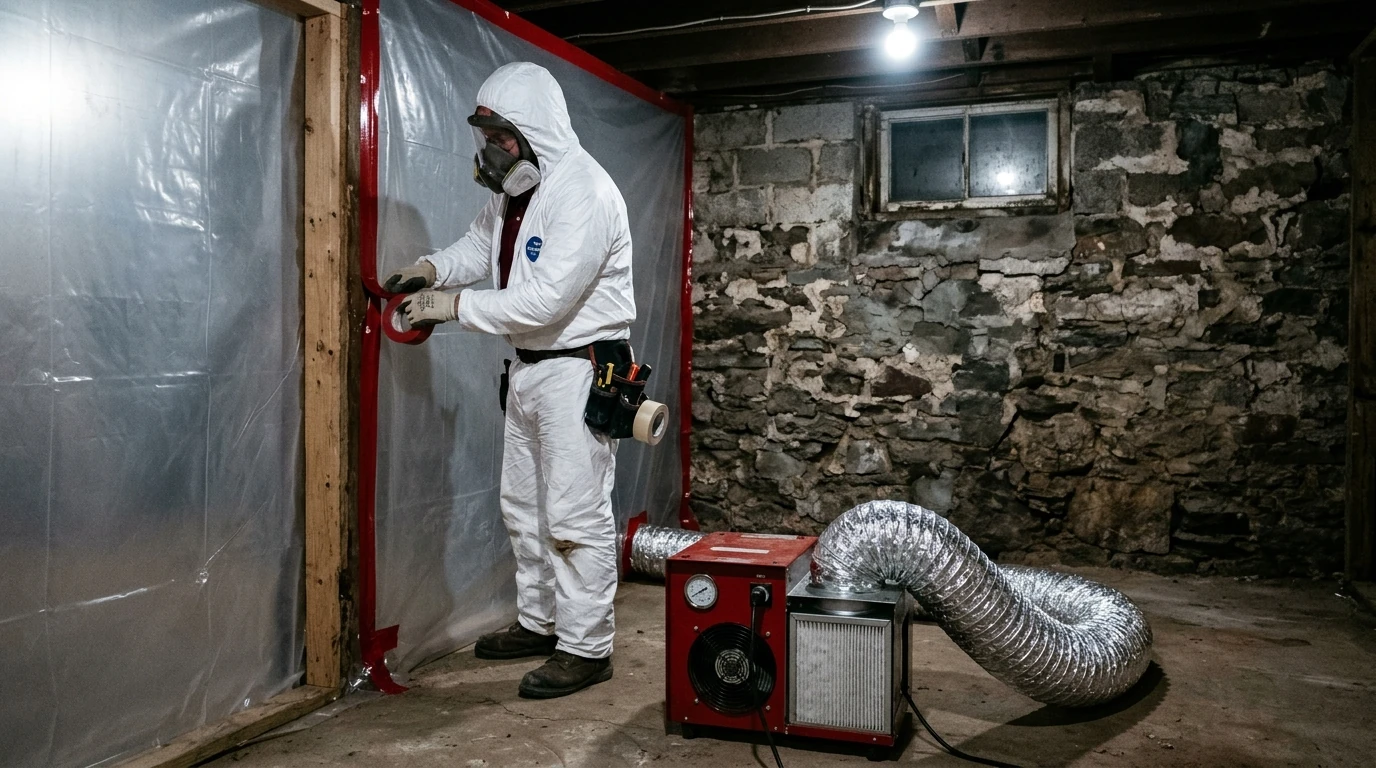
- Containment. The work area gets sealed off with plastic sheeting and negative-pressure air handling so fibers can’t migrate to the rest of the house.
- Removal. Technicians in full protective suits and respirators remove the material using wet methods to keep fibers down, then bag and seal it for transport.
- Clearance testing. An independent air sample confirms the space is safe before containment comes down.
Is Encapsulation Cheaper Than Full Removal?
Encapsulation, sealing intact asbestos material in place with a specialized coating, usually costs less upfront than full removal, but it’s not always the right call. It works best on solid, undamaged material like pipe wrap in a basement you’re not planning to renovate.
Full removal makes more sense when you’re renovating the area anyway, when the material is already damaged or friable, or when you want the asbestos gone from the title history before selling. Encapsulation also means you’re disclosing the material’s presence indefinitely rather than closing the issue out.
If you’re staring at a popcorn ceiling in a Pittsburgh home built before the mid-1980s or pulling up old floor tile and want a straight answer on what it will actually cost to deal with, schedule an asbestos assessment with Katofsky Construction LLC before you do any more demolition. Disturbing suspect material without testing it first is the single most common way homeowners turn a contained problem into a house-wide one.
About Katofsky Construction LLC
Katofsky Construction LLC is an IICRC Certified Firm based in Plum, PA, serving Pittsburgh and the surrounding South Hills, North Hills, and Westmoreland County communities, including Mount Lebanon and Monroeville. The company is a Pennsylvania-registered Home Improvement Contractor (HIC #090877) and operates on a 24/7 basis. Their crews handle asbestos abatement, lead paint abatement, fire and smoke damage restoration, sewage cleanup, biohazard cleanup, reconstruction, and general contracting across the region.
Need help now? Call Katofsky Construction LLC at (412) 304-9284.