TL;DR: Asbestos and lead paint show up in a large share of homes and commercial buildings built before 1980 across the Pittsburgh region, especially the steel-era housing stock in towns like Homestead, Munhall, and McKeesport. Safe abatement means testing the material first, containing the work area, removing it under controlled conditions, and disposing of it at a licensed facility, not sanding, scraping, or demolishing it yourself.
If a contractor just stopped mid-demolition because they found crumbling pipe insulation in your basement, or a home inspection flagged peeling paint on a 1920s porch in Munhall, you’re facing a decision a lot of Pittsburgh-area owners run into: how do you deal with a material that’s dangerous to disturb but was completely normal to install when the building went up? Much of the region’s housing stock, built for steel and rail workers between 1900 and 1960, used materials nobody thought twice about at the time. Today those same materials require licensed handling before any renovation, demolition, or even a routine repair can move forward.
What Buildings in the Pittsburgh Area Are Most Likely to Have Asbestos or Lead Paint?
Any Pittsburgh-area building put up before 1980 is a candidate for asbestos, and anything built before 1978 is a candidate for lead paint, the year the federal government banned lead-based residential paint. Age matters more than neighborhood or style.
For asbestos, the usual culprits are pipe and boiler insulation in older basements, vermiculite attic insulation (often sold under the Zonolite brand), 9-by-9 or 12-by-12 vinyl floor tile and the black mastic underneath it, textured “popcorn” ceilings, cement siding shingles, and older roofing felt. Any of these can release fibers into the air once they’re cut, sanded, drilled, or crumbled, which is why the EPA treats disturbance as the real trigger, not just presence of the material.
Lead paint shows up on painted trim, windows, doors, porches, and exterior siding in homes built before 1978. It’s especially common in the dense mill-town housing stock around Homestead, Munhall, and McKeesport, where row houses and early-20th-century frame homes were painted repeatedly over decades. The EPA’s Renovation, Repair and Painting rule governs how that paint has to be handled anytime it’s disturbed during work on the property.
How Does Professional Asbestos and Lead Abatement Actually Work?
Abatement follows a set sequence regardless of which material is involved: test, contain, remove under controlled conditions, and verify the space is clean before anyone reoccupies it. Skipping a step is what turns a manageable repair into a contamination problem.
- Sampling and lab testing. Before any work starts, a sample of the suspect material gets collected and sent to an accredited lab to confirm whether asbestos or lead is actually present.
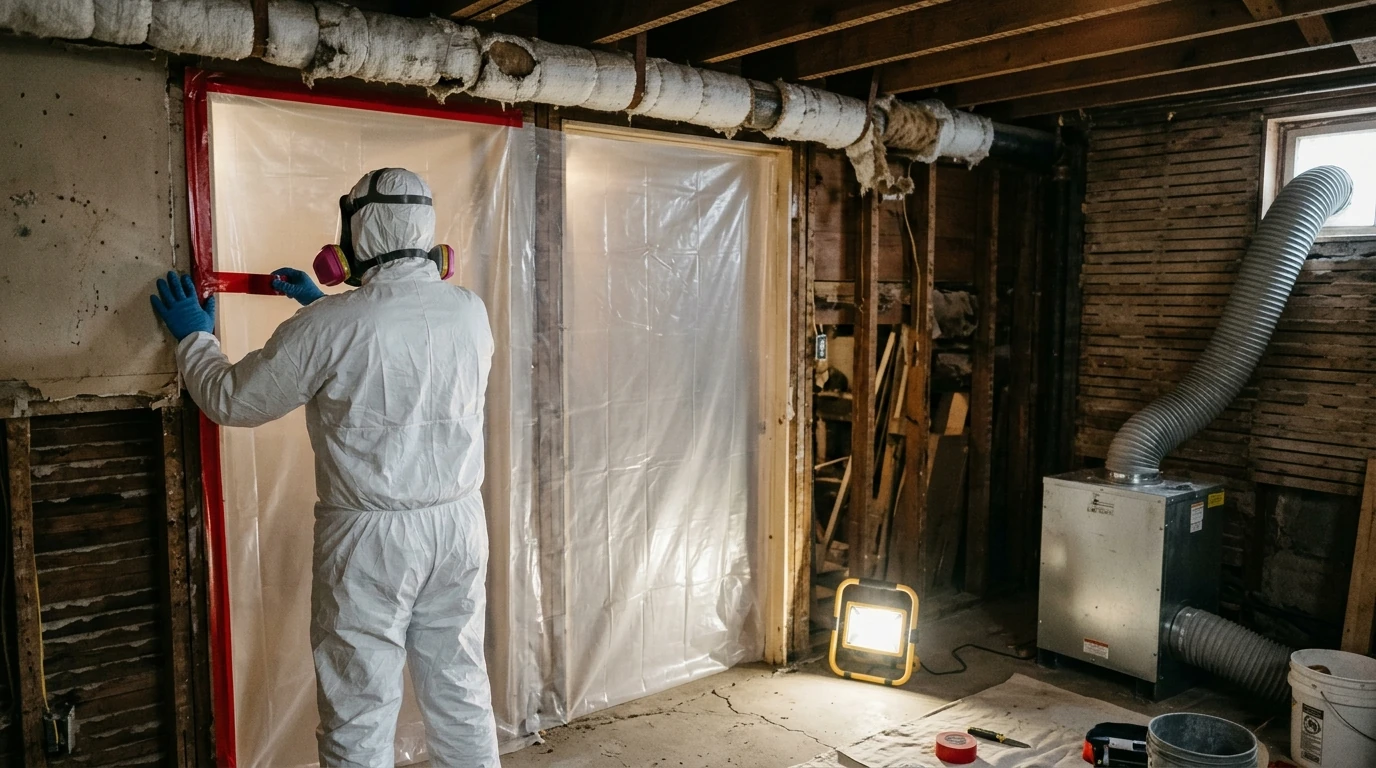
- Containment setup. Poly sheeting seals off the work area, and a negative-air machine with HEPA filtration keeps fibers or dust from migrating into the rest of the building.
- Controlled removal. Crews work in full-coverage protective suits and P100 respirators, wetting material as they go to limit airborne fiber or dust release.
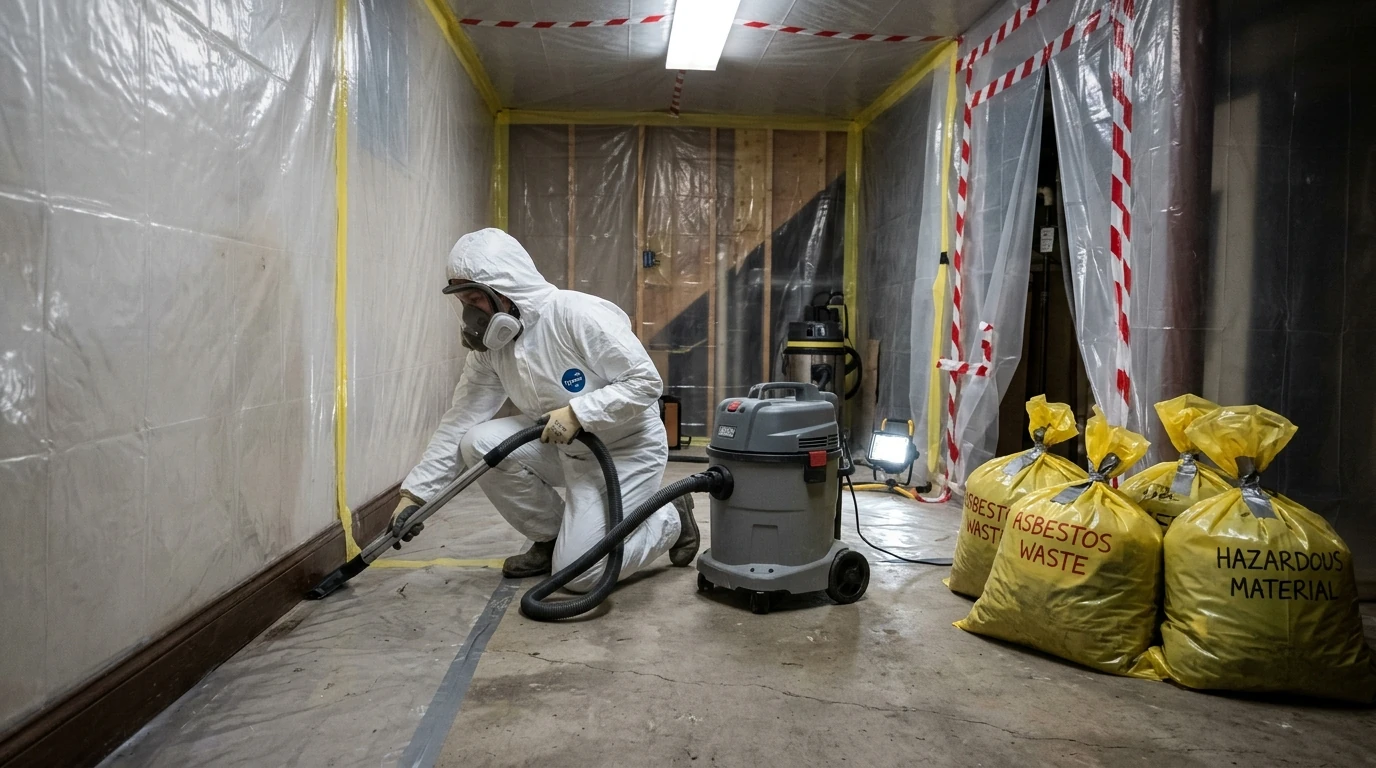
- HEPA cleanup. Every surface inside the containment zone gets HEPA-vacuumed and wet-wiped, not swept or dry-dusted.
- Licensed disposal. Waste is bagged, labeled, and hauled to a facility permitted to accept it, with manifests documenting where it went.
- Clearance. A final visual inspection, and for asbestos, air sampling, confirms the space is safe before reconstruction or repainting starts.
What Should You Watch Out for Before Hiring an Abatement Contractor?
The biggest red flag is a contractor willing to sand, scrape, cut, or demolish suspect material before it’s been tested. The second is skipping containment to save time. Both increase the risk of contaminating the rest of the building and create real liability for the owner.
Pennsylvania doesn’t let just anyone do this work. Lead paint work on pre-1978 properties has to follow EPA’s practices, and asbestos abatement requires state-accredited training, with notification to the state sometimes required depending on the scope of the job. Before hiring anyone, verify their registration through the Pennsylvania Attorney General’s Home Improvement Contractor registration search, and ask for the lab report, the written containment plan, and the clearance documentation up front, not after the work is done.
On the insurance side, most homeowners and commercial policies treat asbestos or lead paint as a maintenance condition rather than a covered loss, so testing and removal typically come out of pocket. Coverage sometimes applies if the material was disturbed by a separate, covered event, like fire damage that exposed old pipe insulation, but that depends entirely on the policy language, so it’s worth a call to the carrier before assuming either way. Our guide to choosing a restoration company covers more of what to ask any contractor before signing, abatement included.
What Should You Do If You Suspect Asbestos or Lead Paint in Your Pittsburgh Property?
Stop disturbing the material immediately. Don’t sand, cut, drill, dry-sweep, or demolish anything until it’s been tested, since disturbance, not presence, is what creates the hazard.
If you’re selling a pre-1978 home, federal law requires a lead-paint disclosure to the buyer. If you’re planning a renovation or demolition, test the suspect material first so any abatement work is already scoped before the rest of the project timeline gets set. Katofsky Construction LLC handles asbestos and lead paint abatement for homeowners and property managers across the Pittsburgh area, and can sequence it directly into the reconstruction or general contracting work that follows, so the project doesn’t stall waiting on a second contractor. Our overview of general contracting and reconstruction walks through what that handoff usually looks like.
A positive test result isn’t necessarily bad news. It means you can scope the work accurately, abate it under controlled conditions, and move into the rebuild without surprises later. Call Katofsky Construction LLC at (412) 304-9284 to schedule an assessment before your next renovation or demolition project gets underway.
About Katofsky Construction LLC
Katofsky Construction LLC is an IICRC Certified Firm based in Plum, PA (license #090877), serving Pittsburgh and surrounding communities including Penn Hills, McCandless, Bethel Park, and Mount Lebanon. Their crews handle asbestos abatement, lead paint abatement, fire and smoke damage restoration, reconstruction, roofing, and related general contracting work, with Michael Katofsky and the team overseeing projects from initial testing through the final rebuild.