Mold Inspection and Testing in Pittsburgh
Mold inspection and testing in Pittsburgh and surrounding areas. IICRC-certified, insurance billing accepted. Call (412) 304-9284.
A musty smell that won’t go away after a leak was fixed, a damp basement corner that stays dark even in summer, or a family member with unexplained allergy symptoms that ease up when they’re out of the house: these are the signals that send homeowners searching for answers rather than a cleanup crew. Mold inspection and testing is the diagnostic step that tells you what’s actually growing, where, and how bad it is, before anyone starts tearing out drywall or quoting remediation work you may not need.
What Mold Inspection and Testing actually involves
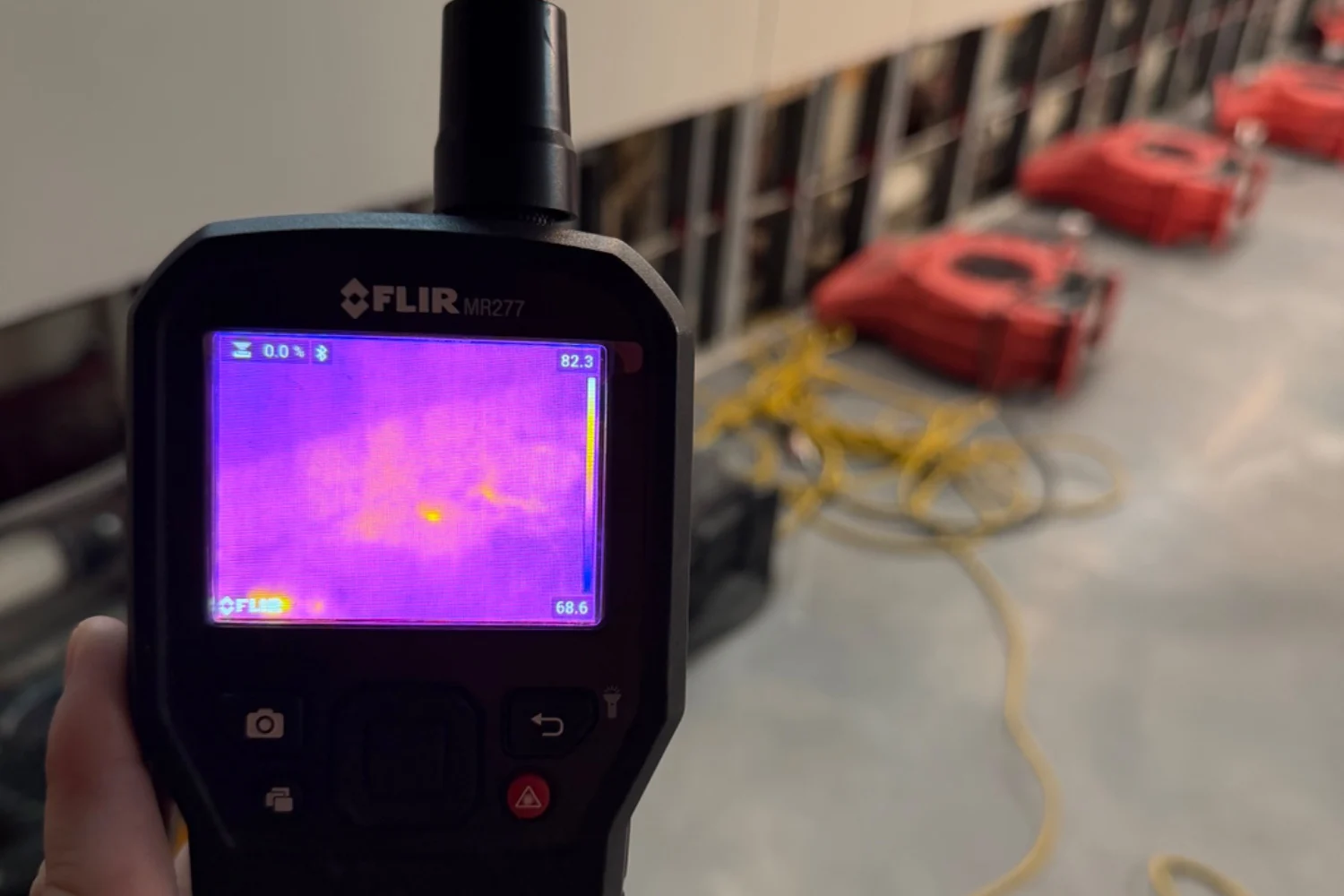
A proper mold inspection starts with a visual walkthrough of the property, inside and out, looking at roof lines, foundation walls, crawlspaces, attic ventilation, and anywhere moisture has a history of getting in. From there our IICRC AMRT-trained technicians use moisture meters and sometimes thermal imaging to find dampness hiding behind finished surfaces, since visible mold is often just the tip of a larger moisture problem in the wall cavity or subfloor. Air sampling and surface (tape lift or swab) sampling are used to identify spore types and concentrations, and samples go to a third-party lab rather than being read in-house, which keeps the results independent of any remediation recommendation. Most inspections take one to two hours on-site, with lab results typically back within three to five business days.
Our process
- Intake and history. We ask about past leaks, recent renovations, HVAC issues, and symptom patterns before we even arrive, so the inspection is targeted rather than a blind sweep.
- Visual and moisture assessment. Technicians check high-risk zones (basements, bathrooms, attics, exterior walls) with moisture meters and, where useful, thermal imaging to flag hidden wet areas.
- Sampling. Depending on what the visual inspection turns up, we collect air samples, surface samples, or both, along with a control sample from unaffected outdoor or indoor air for comparison.
- Lab analysis. Samples are sent to an accredited third-party laboratory for spore identification and count, keeping the test results separate from any remediation sales conversation.
- Written report and recommendation. You get a clear report: what was found, where, at what concentration, and whether remediation is warranted, along with a scope if it is.
What separates a good Mold Inspection and Testing response from a bad one
The most common shortcut in this industry is skipping moisture investigation and going straight to air sampling, which tells you spore counts but not the source. A good inspection traces the moisture pathway, because mold keeps coming back if the water intrusion isn’t identified and documented. Another mistake is testing only the complaint area and ignoring adjacent rooms or the HVAC system, which can spread spores throughout a house even when visible growth is confined to one spot. Insurance adjusters reviewing a claim want to see lab chain-of-custody documentation, not just photos, so a report without third-party lab results carries less weight if you need to dispute a claim decision or get remediation approved. We also keep inspection and remediation separate functions on paper, since a company that both tests and sells the fix has an obvious incentive problem a homeowner should be able to see through in the report itself.
What does Mold Inspection and Testing cost?
Costs vary with the size of the property, the number of sample locations, and whether both air and surface sampling are needed. Every inspection gets a written scope before any sampling begins, and because every property and moisture history is different, final pricing depends on what the walkthrough finds. Homeowners insurance typically covers mold testing when it’s tied to a covered water loss, but it generally won’t pay for testing related to long-term humidity or maintenance issues, so it’s worth checking your policy language before scheduling.
| Scenario | Typical range |
|---|---|
| Single-room visual inspection, no sampling | $200 - $400 |
| Standard inspection with air sampling (2-3 samples) | $400 - $700 |
| Whole-house inspection with air and surface sampling | $600 - $1,200 |
| Post-remediation clearance testing | $300 - $600 |
| Pre-purchase home inspection add-on | $250 - $500 |
Seasonal & regional considerations
Pittsburgh’s humid summers and older housing stock, much of it with masonry foundations and finished basements built before modern vapor barriers were standard, create year-round conditions for hidden moisture. Spring thaw and heavy rain periods tend to push basement and crawlspace inspection requests up, while winter brings a different pattern: condensation around poorly insulated attics and windows that homeowners mistake for a roof leak. Humidity swings between seasons are also a common reason indoor air quality testing gets requested even when no visible mold is present.
Service area
Katofsky Construction LLC performs mold inspection and testing throughout Pittsburgh and surrounding communities including Penn Hills, McCandless, Bethel Park, Mount Lebanon, Monroeville, Plum, West Mifflin, McKeesport, Greensburg, Murrysville, and the other municipalities we serve across the region.
If something in your house smells off or you’ve spotted discoloration that won’t scrub away, request an air quality test and get a lab-backed answer before deciding what to do next. Call (412) 304-9284 to schedule an inspection.
Frequently Asked Questions
Does homeowners insurance cover mold inspection and testing?
What's the difference between air sampling and surface sampling?
How long does it take to get mold test results back?
Can I get a mold inspection without committing to remediation work?
Is a mold inspection worth it if I can already see visible growth?
Should I test my HVAC system separately from the rest of the house?
Looking for the best mold inspection and testing company in Pittsburgh?
Katofsky Construction LLC provides licensed and insured mold inspection and testing in Pittsburgh, PA and the surrounding area. We answer calls 24/7 — call (412) 304-9284 for immediate help.
Need Mold Inspection and Testing now?
We respond 24/7 across Pittsburgh and surrounding PA cities.