Mold Remediation in Homestead
Mold remediation in Homestead, PA. IICRC-certified, insurance billing accepted. Call (412) 304-9284.
Our IICRC-certified technicians are dispatched from our Pittsburgh, PA headquarters and are typically on-site in Homestead within 60 minutes of your call.
Mold problem in a Homestead home? Call Katofsky Construction at (412) 304-9284, and our IICRC-trained team can get a remediation plan moving fast, day or night, since we answer calls 24/7.
Homestead’s housing stock tells a story: steep hillside streets lined with early-1900s frame and brick homes built for steelworkers’ families, many with original masonry foundations and additions tucked onto narrow lots above the Monongahela River valley. That combination, older plaster and masonry plus a river-valley microclimate that holds humidity longer than the surrounding ridgetops, creates conditions where a slow roof leak or a damp basement wall can turn into a mold colony faster than homeowners expect.
Why Homestead Properties See Mold Issues
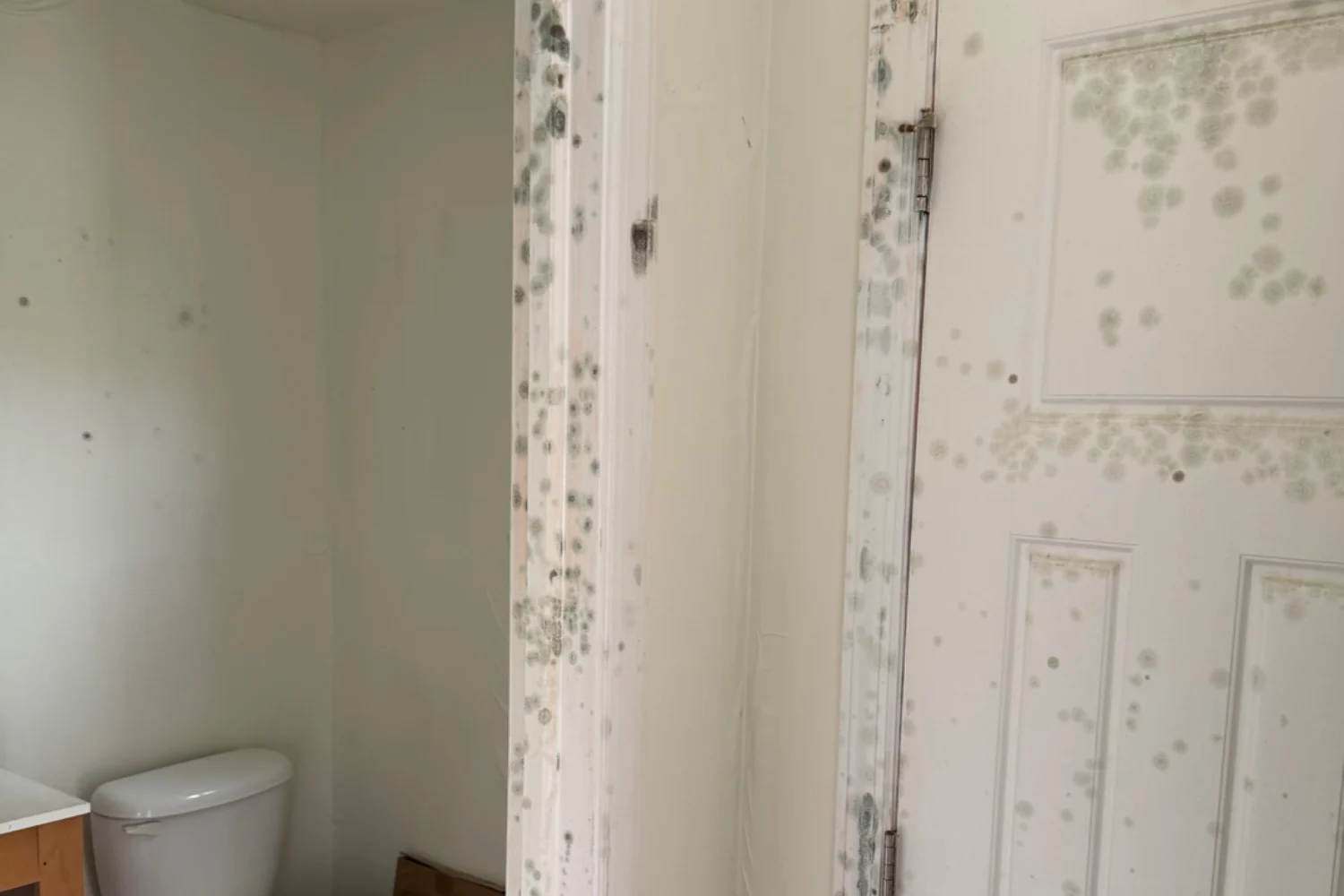
Homestead sits low against the Monongahela, and that river-valley position means summer humidity lingers after storms roll through the Pittsburgh region, often a day or two longer than it does on higher ground. Combine that with foundations and crawlspaces common to homes built during the borough’s steel-era boom, many with minimal vapor barriers by today’s standards, and you get basements and lower-level framing that stay damp well after the visible water is gone. Add a block of rowhouses or closely-set frame homes sharing drainage patterns, and a gutter or grading problem on one property can push moisture toward a neighbor’s foundation too. Mold doesn’t need a flood to take hold here; a persistently damp crawlspace or a slow bathroom leak behind original tile is enough, and colonization can start within 24 to 48 hours once materials stay wet.
Our Mold Remediation Process in Homestead
We start with containment, because older Homestead homes often have forced-air ductwork or balloon-frame wall cavities that can carry spores between floors faster than in newer construction. Negative air machines and physical barriers go up before any demolition begins. From there, our AMRT-trained crew removes affected porous materials, which in homes from this era frequently means plaster, original lath, or early drywall rather than the moisture-resistant board used today, and that changes how much needs to come out versus what can be cleaned in place. HEPA vacuuming, antimicrobial treatment, and structural drying follow, with moisture readings tracked against the home’s framing type rather than a generic benchmark, since plaster and dimensional lumber from the 1920s and 30s dry at a different rate than modern materials. We don’t consider a job finished until moisture content reads within a normal range for the structure, not just the room.
Homestead Insurance & HOA Coordination
Most Homestead mold claims we see trace back to a covered water event, a failed water heater, a roof leak, a supply line break, rather than mold itself, since most policies treat long-term moisture and mold growth differently from sudden water damage. We document the source, the extent of affected materials, and the remediation steps taken so that distinction is clear when a claim goes to adjustment. For borough properties with shared walls or close lot lines, we also coordinate with neighboring owners when containment or exterior access requires it, which comes up more often on Homestead’s tighter residential blocks than it would on larger suburban lots.
Local note
A lot of Homestead’s older homes were built with coal-fired furnaces in mind, and even after conversion to gas, the original chimney chase or coal cellar often still exists as an unfinished, unventilated space below grade. These spaces get overlooked during a standard walkthrough because they’re not part of the living area, but they hold moisture and organic dust that make an ideal mold substrate. We make a point of checking former coal cellars and chimney chases on Homestead jobs even when the visible damage is upstairs, because spores traveling down through an old chase can seed a basement problem long before anyone smells it.
If you’re dealing with a musty smell, visible growth, or a water event that’s had time to sit in a Homestead property, don’t wait for it to spread through the wall cavity. Katofsky Construction is licensed under #090877 and carries IICRC certification in mold remediation, and we’re set up to start containment and testing coordination on Homestead properties quickly, with scheduling available around the clock.
Mold Remediation in Homestead: Service Coverage
Frequently Asked Questions
How fast can you arrive for mold remediation in Homestead?
How does Homestead's riverfront humidity affect mold growth compared to properties farther from the Monongahela?
Do Homestead's older steel-era homes need a different mold removal approach than newer construction?
Will you check basements and former coal cellars in Homestead properties even if the mold is visible upstairs?
What's the typical process for a mold remediation job in a Homestead home, start to finish?
Will my insurance cover mold remediation if the cause was a leak in my Homestead home?
Mold Remediation response in Homestead
Most Homestead calls see a technician on-site within 60 minutes from our Pittsburgh headquarters.