If you’re staring at a dark patch on drywall or in a bathroom corner, the short answer is: color alone won’t tell you what it is. “Black mold” usually refers to Stachybotrys chartarum, a specific species that often looks dark green to black and slimy when wet. But plenty of common household molds (Cladosporium, Aspergillus, Penicillium) also grow black, gray, or near-black depending on the surface and moisture level. The only way to know for certain which species you’re looking at is lab testing. What matters more for your health and your house is how long it’s been growing, how much surface area it covers, and what’s feeding it.
What People Actually Mean by “Black Mold” vs “Regular Mold”
When people say “black mold,” they’re usually worried about Stachybotrys, the species that got a lot of news coverage in the 1990s and 2000s for producing mycotoxins. It needs a lot of sustained moisture to grow, which is why it shows up on water-damaged drywall, wallpaper paste, or wood that’s stayed wet for days, not hours. “Regular mold” is the catch-all for the dozens of species that show up faster and in milder moisture conditions: on shower grout, window sills with condensation, basement boxes, or the back of furniture pushed against an exterior wall.
Color overlaps so much between species that visual ID is unreliable even for experienced eyes. Texture is a slightly better clue: Stachybotrys tends to look wet, slimy, or almost shiny at first and turns powdery as it dries out. Many common molds look fuzzy or powdery from the start. But texture still isn’t proof, and treating any visible mold colony as “probably harmless” because it’s not jet black is a mistake. If it’s growing indoors on a wet building material, it needs attention regardless of species.
How to Assess What You’re Looking At (Safely)
Before you do anything else, don’t touch it, don’t scrape it, and don’t spray it with bleach to “see what happens.” Disturbing a colony releases spores into the air, which is the opposite of what you want while you’re still figuring out the scope of the problem. Instead:
- Photograph it from a few feet away and up close, with a ruler or coin in frame for scale.
- Check for the moisture source. Mold doesn’t grow without water. Look above the stain for a roof or plumbing leak, check the other side of the wall for an exterior grade issue, or feel the material for softness or a cool, damp patch.
- Note the smell. A persistent musty, earthy odor in a room with no visible growth often means mold is active somewhere you can’t see yet, behind a baseboard, under flooring, or inside a wall cavity.
- Measure the area. The EPA’s general guidance is that mold covering less than about 10 square feet can often be handled with careful DIY cleanup on non-porous surfaces, while anything larger, or any mold on porous materials like drywall, insulation, or carpet padding, is better left to a professional with containment equipment.
If you want species confirmation, a mold inspection with lab sampling is the only reliable path. Visual guessing, even an experienced guess, isn’t the same as a test result.
What Not to Do
- Don’t paint or caulk over it. Sealing in an active colony doesn’t kill it. It keeps growing behind the new surface and the problem resurfaces later, often worse and harder to access.
- Don’t rely on bleach as a cure. Bleach can lighten the surface stain on nonporous materials like tile, but it doesn’t penetrate porous materials like drywall or wood, where the mold’s root structure (hyphae) actually lives.
- Don’t run a box fan to “dry it out” without containment. Blowing air across an active mold colony spreads spores throughout the house instead of resolving the source.
- Don’t ignore it because it’s small. A patch the size of your palm today can be the visible edge of a much larger colony growing inside the wall cavity, especially if the moisture source hasn’t been fixed.
When to Call a Professional
A few signs point toward bringing in help rather than handling it yourself:
- The affected area is larger than roughly 10 square feet, or it’s spread across multiple rooms.
- The mold followed a known water event, a roof leak, a burst pipe, a slow plumbing leak, or past flooding, and you’re not confident the material underneath dried out fully.
- Someone in the house has ongoing respiratory irritation, headaches, or allergy-like symptoms that improve when they’re away from home.
- You need documentation for an insurance claim or a real estate transaction, where a verbal opinion isn’t enough and you need sampling results on paper.
Katofsky Construction LLC is an IICRC Certified Firm and carries IICRC AMRT (Applied Microbial Remediation Technician) and WRT (Water Damage Restoration Technician) certifications, and offers both mold inspection and testing and mold remediation for homes and buildings across the Pittsburgh area. Testing identifies what’s actually growing and how far it’s spread before any remediation plan is built, which matters since the right containment and removal approach differs depending on the material affected and the size of the area.
The Recovery Process, Once You Know What You’re Dealing With
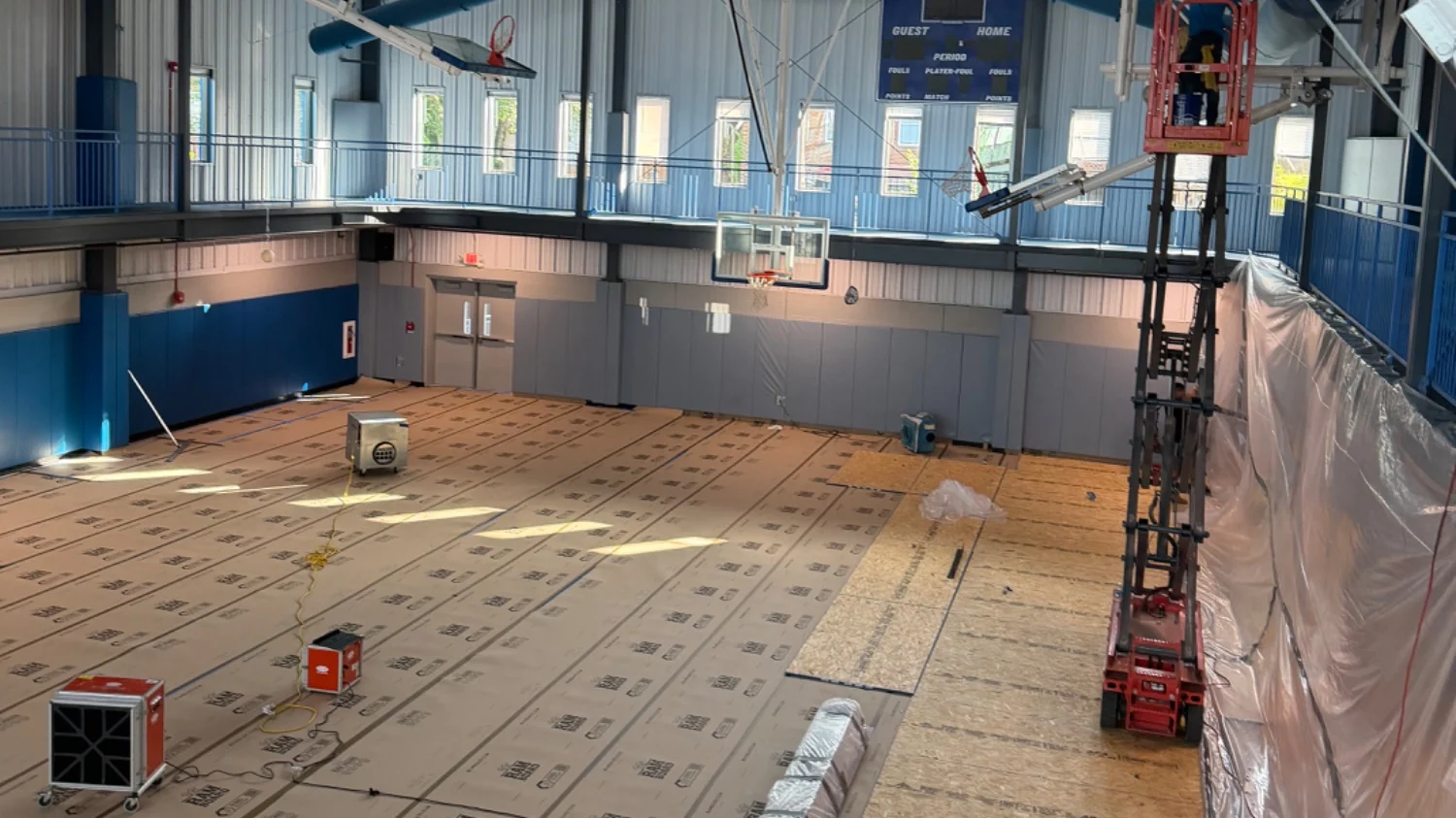
Remediation isn’t a single spray-and-wipe step. It typically follows a sequence: isolate the affected area with containment barriers and negative air pressure so spores don’t spread to the rest of the house, remove and discard porous materials that can’t be fully cleaned (most drywall and insulation fall into this category once colonized), HEPA-vacuum and clean salvageable surfaces, and run air scrubbers while the space dries. None of this works long-term if the original moisture source, the roof flashing, the plumbing leak, the grading problem, isn’t fixed first. A remediation plan that skips that step is just buying time until the mold comes back.
If you’re standing in front of a dark patch of growth and you’re not sure what you’re looking at or how far it’s spread, that uncertainty is reasonable; even trained eyes can’t call a species from across the room. A mold inspection gives you an answer in writing instead of a guess, and from there you’ll know whether you’re looking at a weekend cleanup or a job that needs containment and professional removal. Katofsky Construction LLC can be reached at (412) 304-9284 to talk through what you’re seeing before deciding on next steps.