TL;DR: Air duct and HVAC cleaning removes dust, pet dander, construction debris, and other buildup from the supply and return lines, the registers, and the air handler itself. Most homes need it every 3 to 5 years, sooner after a renovation, a house fire, or a pest issue. The National Air Duct Cleaners Association (NADCA) sets the industry standard: source removal with negative pressure and HEPA filtration, not a quick pass with a shop vac.
If you just finished a kitchen remodel in a Monroeville or Bethel Park home and a fine gray dust keeps settling back on the counters within days of cleaning, or the furnace kicks on and someone in the house starts sneezing on cue, the ductwork is a reasonable place to look. It’s also the first thing worth checking after smoke moves through a home’s HVAC system during a fire, since soot and odor travel through the ducts long after the flames are out. Here’s what the service actually involves, how to know you need it, and what separates a real cleaning from a door-hanger special.
What Does Air Duct & HVAC Cleaning Actually Include?
A full air duct and HVAC cleaning cleans every accessible component of the system: the supply and return ducts, the registers and grilles, the furnace or air handler cabinet, the evaporator coil, and the blower assembly. A partial cleaning, which is what most low-cost ads are selling, usually touches only the ducts and skips the equipment that actually moves the dust around.
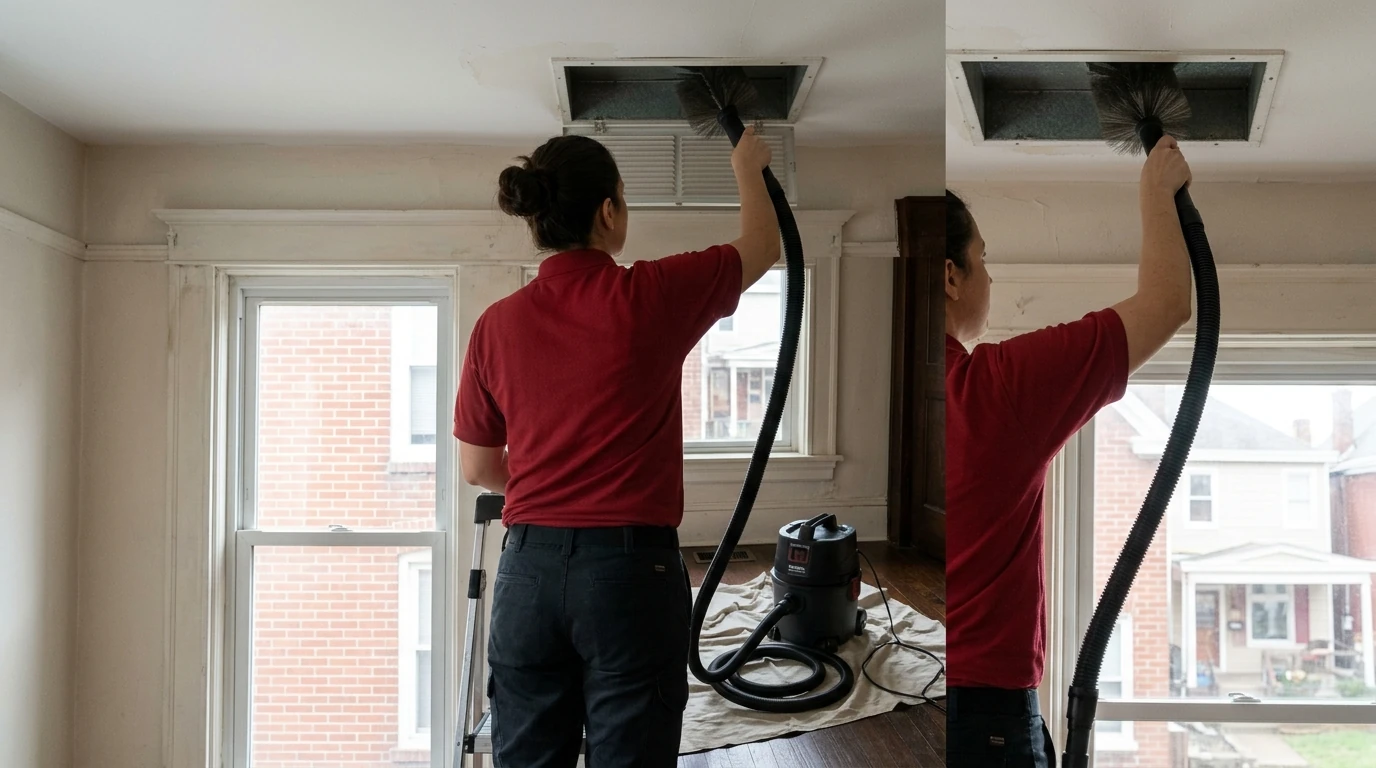
The standard method uses a negative-pressure HEPA vacuum connected to the trunk line while a technician works each branch with a rotary brush or air whip to loosen debris, which then gets pulled into the vacuum instead of blown back into the room. NADCA publishes the technical guidelines most reputable crews follow, including which components get cleaned and how results get verified.
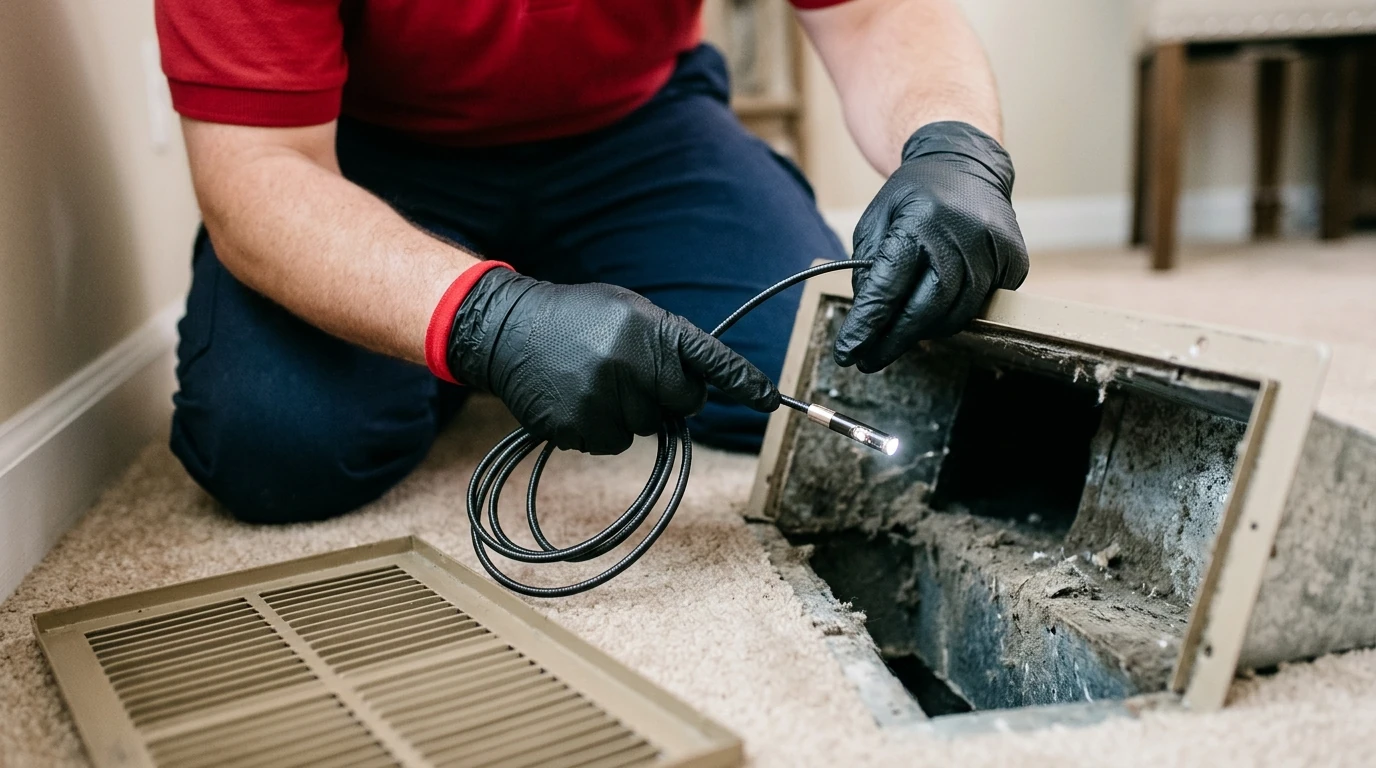
A proper job also includes resealing any access panels that were cut into the ductwork and a final visual check, sometimes with a camera, confirming the duct walls are actually clean rather than just disturbed.
What Are the Signs Your Ducts Need Cleaning?
Visible dust blowing out of the registers when the system starts is the clearest sign ductwork needs attention. A few other signals are worth paying attention to before scheduling anything:
- Dust resettles on surfaces within a day or two of cleaning the house
- Airflow feels noticeably weaker in some rooms than others
- A recent renovation, demolition, or drywall repair left dust in the air that the HVAC system pulled in
- You can see insulation fragments, debris, or rodent activity when you remove a register cover
- A stale, dusty smell comes through the vents specifically when the system cycles on
- The home just changed hands and the duct history is unknown
None of these alone proves the ducts are the problem, but two or three together are a reasonable trigger to have a technician actually open a few registers and look, rather than guessing from the thermostat.
How Often Should Pittsburgh Homes Have Their Ducts Cleaned?
Most homes should have their ductwork cleaned every 3 to 5 years under normal conditions, with shorter intervals for households with pets, smokers, or anyone with significant respiratory sensitivity. That’s a general guideline, not a hard rule, since the right interval depends on the house.
Pittsburgh’s older housing stock complicates the math. A lot of homes across Mount Lebanon, Ross Township, and Penn Hills have had multiple HVAC retrofits over the decades, meaning sections of ductwork from different eras tie into the same system, sometimes with uninsulated or poorly sealed runs in an attic or crawlspace. Those transition points collect more debris than a duct system installed all at once in new construction.
A handful of events should move up the timeline regardless of how recently the ducts were last cleaned: a major renovation that generated drywall or sawdust, a fire in the home (soot travels through the HVAC system and settles well beyond the room where the fire occurred), a pest infestation, or visible water staining around a register that suggests moisture got into the system. If a fire moved smoke through the home, see our guide to the fire damage restoration process for how duct cleaning fits into the larger scope of work, and how professionals remove smoke odor for why skipping the ductwork usually means the smell comes back.
What Should You Look for When Hiring an Air Duct Cleaning Company?
Look for a company that provides a written scope describing exactly which components will be cleaned, uses HEPA-filtered negative-pressure equipment, and can show before-and-after documentation rather than just a verbal “all done.” A flat $99 whole-house price advertised on a postcard is almost always a partial cleaning of the easy-to-reach ducts only.
Ask directly whether the technicians follow NADCA’s standard for source removal, and whether the furnace or air handler and the coil are included in the price or billed separately. The EPA notes that duct cleaning should be approached as one part of an overall indoor air quality plan, not a standalone fix, so a company that also talks through filtration, humidity, and ventilation is usually giving straighter advice than one selling duct cleaning as a cure-all.
Get the scope in writing before work starts, including which registers and runs are accessible and which aren’t (finished basements and tight crawlspaces sometimes limit what a crew can reach without opening drywall).
For homes in Pittsburgh and the surrounding communities, Katofsky Construction LLC schedules air duct and HVAC cleaning with a written scope up front, so there’s no guessing about what’s included before the crew arrives.
About Katofsky Construction LLC
Katofsky Construction LLC is an IICRC Certified Firm serving Pittsburgh, PA and the surrounding region, licensed under PA Home Improvement Contractor registration #090877. Michael Katofsky and the crew handle air duct and HVAC cleaning, fire and smoke damage restoration, carpet and upholstery cleaning, reconstruction, roofing, and related property services across Pittsburgh, Penn Hills, Mount Lebanon, Monroeville, and nearby communities.
Need help now? Call Katofsky Construction LLC at (412) 304-9284.